 PANELGLOT
Arabic manga translation without flipping the story
Arabic changes the direction and shaping of the words. It must not mirror the artwork or reverse the page order chosen by the original comic.
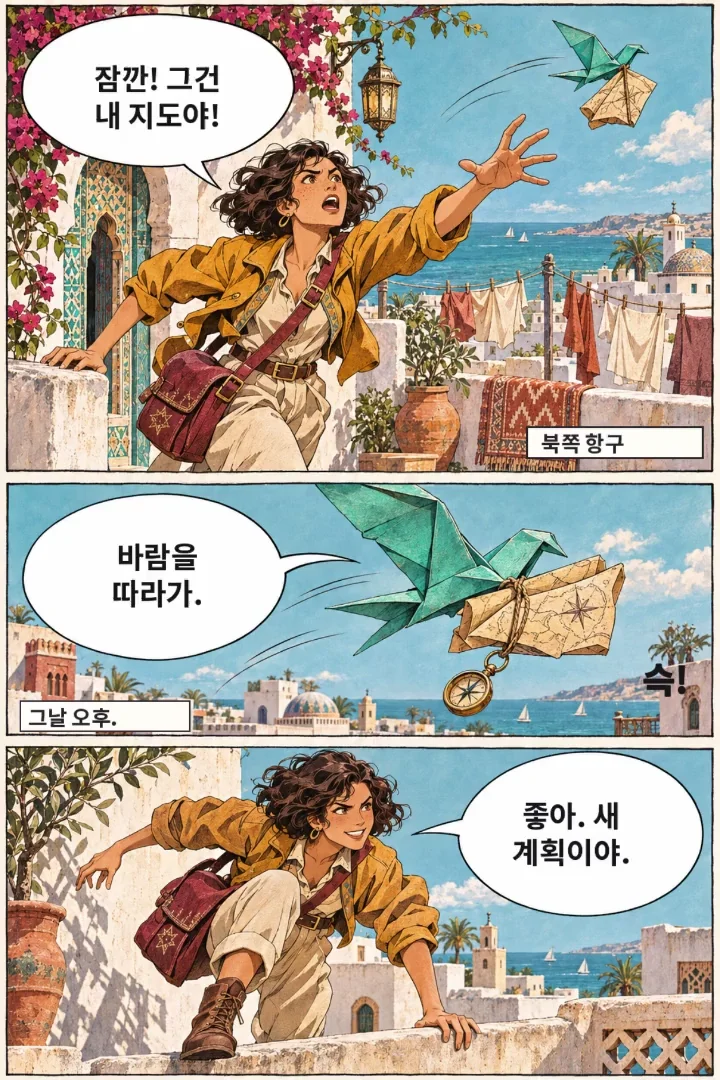
Two directions must stay separate
Arabic text is written right to left. Japanese manga is also commonly read from right to left, but these are different rules. One controls the order and shaping of words; the other controls page and panel navigation. Panelglot treats interface locale, translated lettering direction and content reading mode as separate settings.
A vertical manhwa remains vertical in Arabic. A left-to-right comic remains left to right. A manga page is not mirrored merely because the translation is Arabic.
Arabic must be shaped as a script, not reversed as characters
Arabic letters change form according to their position and connect within a word. A renderer cannot create readable Arabic by reversing an English string or placing isolated glyphs from left to right. Panelglot uses script-aware layout and right-to-left text flow for Arabic, with appropriate font support in the app and website.
Line breaks also matter. A narrow speech balloon may force a phrase into several lines, and punctuation or embedded Latin names can create bidirectional edge cases. The result needs visual checking, not only a successful translation response.
From recognized text to Arabic dialogue
The source lettering is detected and recognized on the phone. For online translation, recognized text and context can be sent through Panelglot's service; page images are not sent. The renderer then cleans the detected lettering area and fits the Arabic translation back into that area.
The source language must still be identified correctly. Arabic is the target in this example, but the original may be Japanese, Korean, Chinese or another supported language.
Names, honorifics and tone
Names and honorifics do not always have one obvious Arabic form. A glossary can help recurring terms remain consistent, while chapter context can reduce isolated literal translations. Machine output should still be compared with the original when the tone, speaker or name is uncertain.
Panelglot supports Arabic as both an interface and target language, but that does not make every source-to-Arabic pair available offline. Offline translation still depends on a supported pair and a downloaded model.
A useful Arabic test
Check a page with dialogue, punctuation, a Latin name and at least one narrow bubble. Confirm that letters join correctly, punctuation sits in the expected place, text does not cross the bubble edge and the story order remains unchanged. That test is more meaningful than judging a single centered phrase.